21 September 2026
How Much You Actually Save Making Copycat Restaurant Recipes at Home
See exactly how much you save making copycat Applebee's, Olive Garden, and Cracker Barrel recipes at home, with real grocery cost breakdowns per serving.
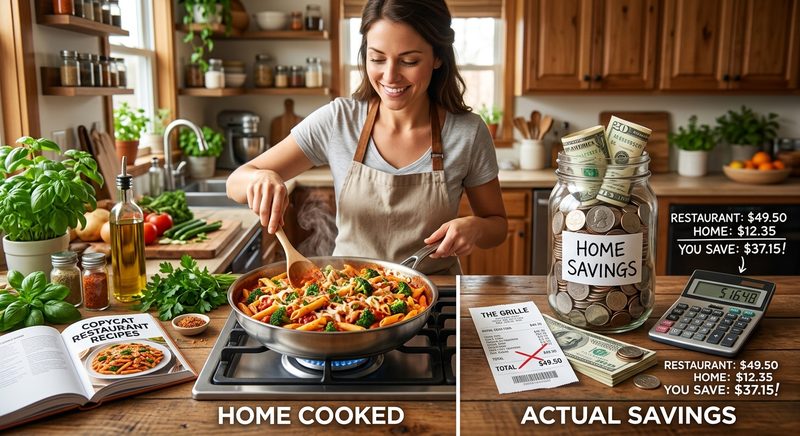
Dining out at a chain restaurant feels routine until you see the receipt. A plate of chicken alfredo costs $19 or more at Olive Garden, yet the same dish made at home costs around $7 in groceries. That gap is not a coincidence. It shows up across every popular chain restaurant dish, and it compounds fast when your household eats out multiple nights a week.
Cooking copycat restaurant recipes at home can save a household of four more than $3,000 per year without any major lifestyle changes.
- Per-serving savings range from $8 to $14 on popular dishes from Applebee's, Olive Garden, and Cracker Barrel.
- A family of four that replaces two restaurant dinners per week with homemade copycats can save $240 or more each month.
- At three nights per week, that monthly savings figure climbs past $360, adding up to over $4,300 a year.
Why the Price Gap Between Restaurants and Groceries Is So Large
When a restaurant charges $19 for chicken alfredo, you are not just paying for pasta and cream. You are paying for server wages, the building's rent, kitchen equipment, food waste, and the business's profit margin. All of that gets layered into the menu price. The actual food cost to the restaurant is a fraction of what appears on your bill.
At home, you pay only for the ingredients. The markup disappears. According to food cost research from the USDA Economic Research Service, food away from home consistently costs more per serving than food prepared at home, and that gap has widened over recent years. That makes the copycat approach more financially worthwhile today than it was even five years ago.
The dishes below use real grocery prices as the baseline to show exactly how wide that gap is across four items you can order right now at Applebee's, Olive Garden, and Cracker Barrel.
Breaking Down Four Popular Copycat Dishes by Cost
Applebee's Bourbon Street Chicken and Shrimp
This is one of Applebee's most-ordered entrees. A single plate runs $16 to $18 at the restaurant. The homemade version uses a chicken breast, a portion of shrimp, Cajun seasoning, garlic, butter, and a bit of chicken broth. Total grocery cost per serving comes in around $5.50 to $6.50. That puts your savings at $10 to $12 per plate.
The dish comes together in one skillet in under 30 minutes. It is not a complicated cook, which means it fits any weeknight schedule without much effort.
Olive Garden Chicken Alfredo
Olive Garden charges $18 to $21 for chicken alfredo. At home, the recipe requires fettuccine, a chicken breast, heavy cream, parmesan, butter, and garlic. The per-serving grocery cost falls between $6.50 and $8.00. Per plate savings: $11 to $14.
Heavy cream and parmesan are the two ingredients that feel expensive but go a long way. A pint of heavy cream and a block of parmesan will cover multiple batches of this recipe, which brings the per-serving cost down further over time.
Cracker Barrel Chicken and Dumplings
A bowl of Cracker Barrel's chicken and dumplings runs $13 to $15. At home, the recipe calls for rotisserie chicken or bone-in thighs, refrigerated biscuit dough, chicken broth, and basic vegetables like carrots, celery, and onion. Ingredient cost per serving lands around $4.50 to $5.50. Savings per bowl: $8 to $10.
One rotisserie chicken, which typically costs $7 to $9, yields enough meat for four to six servings of this dish. That single purchase does most of the heavy lifting on cost.
Cracker Barrel Hashbrown Casserole
Cracker Barrel sells this side dish for $4 to $5 per serving. At home, you combine frozen shredded potatoes, cream of mushroom soup, shredded cheddar, and sour cream in a baking dish. The per-serving grocery cost drops to about $1.50 to $2.00. The savings look modest in raw per-serving dollars until you account for scale. This recipe feeds eight to ten people from one dish at a total ingredient cost of roughly $14 to $16. Getting the same number of servings at the restaurant costs $35 to $50.
Comparing the Numbers Side by Side
| Dish | Restaurant Price (per serving) | Homemade Cost (per serving) | Savings per Serving |
|---|---|---|---|
| Applebee's Bourbon Street Chicken and Shrimp | $16 to $18 | $5.50 to $6.50 | ~$10 to $12 |
| Olive Garden Chicken Alfredo | $18 to $21 | $6.50 to $8.00 | ~$11 to $14 |
| Cracker Barrel Chicken and Dumplings | $13 to $15 | $4.50 to $5.50 | ~$8 to $10 |
| Cracker Barrel Hashbrown Casserole | $4 to $5 (side) | $1.50 to $2.00 | ~$2.50 to $3.00 |
How to Calculate Savings on Any Copycat Recipe You Try
The four dishes above give you a reliable picture of what savings look like at some of the most popular chain restaurants in the US. But your actual numbers will depend on where you shop, regional grocery prices, and what portion sizes you cook. Running the math on your specific recipes is the only way to know exactly where you stand.
A meal cost calculator lets you enter every ingredient in a recipe, along with the quantity used per serving, and returns an accurate per-serving grocery cost. Compare that number to the restaurant menu price and you have your real savings figure for that dish. This works for any recipe, not just the four covered here.
The most important habit when calculating costs is to include every ingredient, down to the pantry staples that seem too small to count. A tablespoon of olive oil, a clove of garlic, a cup of chicken broth. These add small amounts individually. Left out of your totals, they make your homemade cost estimate look lower than it actually is, which means your savings figure is slightly inflated. Tracking everything keeps the math honest, and the savings are still significant even with full ingredient accounting.
Some ingredient categories produce the largest savings gaps when you replicate restaurant dishes at home:
- Protein-heavy entrees with chicken or shrimp: These carry the highest restaurant markup. Per-plate savings tend to run $10 or more, making them the best candidates to copy first.
- Pasta and cream-based dishes: Fettuccine, heavy cream, and butter are inexpensive grocery items. Restaurants charge premium prices for the convenience and setting, not the ingredients themselves.
- Slow-simmered soups and stews: Comfort dishes like chicken and dumplings are among the cheapest meals you can prepare at home per serving, yet they command strong prices on chain restaurant menus.
- Baked casseroles and shareable sides: These recipes feed large groups at very low per-serving cost, which makes the savings multiply fast compared to buying individual portions at the restaurant.
What Two or Three Homemade Nights Per Week Saves Your Household
The per-serving savings on individual dishes are useful for understanding where the money goes. The weekly and monthly figures are where the numbers start to change your actual budget. Consider a household of four at a chain restaurant. A sit-down dinner with tip and a couple of beverages typically runs $55 to $70 for the table. The same meal prepared at home costs $18 to $28 in groceries. That is a savings of $30 to $45 per outing, before you factor in gas, parking, or time.
Here is how those per-meal savings accumulate over time:
- Two homemade nights per week: $60 to $90 saved weekly. That comes to $240 to $360 per month, or $2,880 to $4,320 over a full year.
- Three homemade nights per week: $90 to $135 saved weekly. That translates to $360 to $540 per month, or $4,320 to $6,480 annually.
- A realistic mixed frequency: A household that averages somewhere between two and three nights per week typically saves $3,500 to $5,000 annually, depending on family size, local grocery prices, and typical restaurant spend per visit.
These figures assume modest spending at the restaurant. Households that tend to add appetizers, desserts, or alcoholic drinks will save more. The estimates also do not account for leftovers, which are common with copycat recipes. A pot of chicken and dumplings or a full baking dish of hashbrown casserole often covers a second meal at no additional cost, which pushes the true savings higher.
The Real Return on Cooking a Copycat Dish More Than Once
This is the part that makes copycat cooking genuinely different from a one-time money-saving experiment. When you learn to make Olive Garden's chicken alfredo at home, that skill does not expire. The recipe takes 25 minutes. It costs around $7 per serving. You can cook it again next week and every week after that. The savings repeat every single time without any additional learning curve.
Applebee's Bourbon Street chicken and shrimp comes together in a single skillet. Cracker Barrel's chicken and dumplings takes about 40 minutes in a Dutch oven or stockpot. These are not elaborate projects. They are practical weeknight meals that happen to cost a fraction of what the restaurant charges for the same flavors.
The household that commits to two copycat nights per week does not need to make dramatic changes to how it lives. It just cooks familiar food at home. The first time you make a recipe, it takes focus. The fifth time, it is automatic. And every single time, you keep the $30 to $45 that would have gone to a restaurant bill.
Start with the dish your household orders most often. Price out the ingredients. Run the numbers against your last receipt from that restaurant. The case for making it at home will be obvious, and the savings will be there every time you do.