Guide
How to Bring Chicken to Temperature Safely for Better Cooking
Bringing chicken closer to room temperature before cooking, a process called tempering, ensures that the meat cooks evenly from edge to center. This guide explains how to bridge the gap between the fridge and the pan safely without risking foodborne illness.
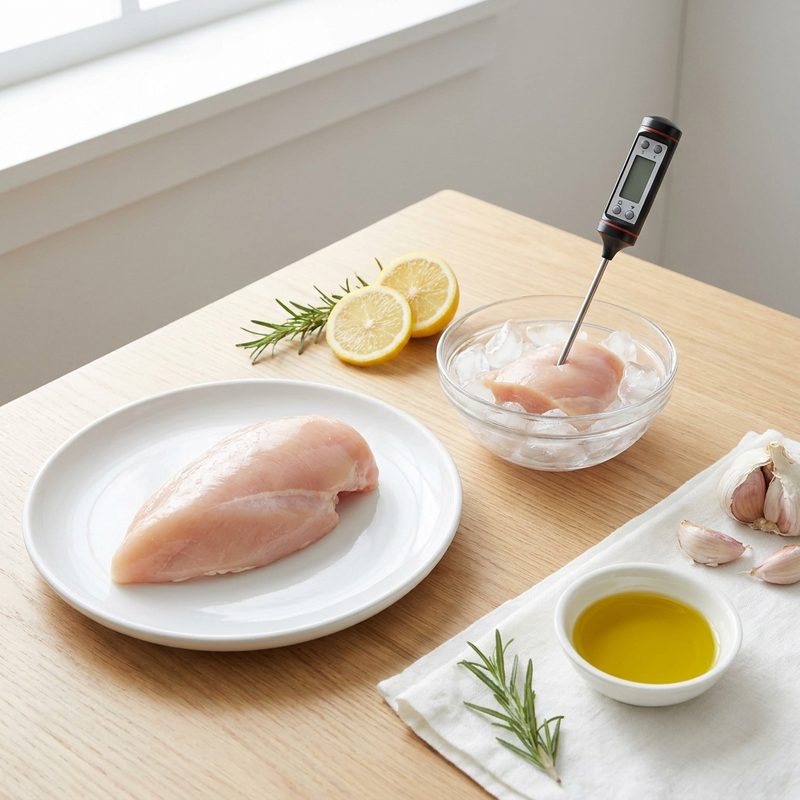
Understanding the 20-Minute Rule
The goal of bringing chicken to temperature is not to make it warm, but to take the refrigerator chill off. For standard cuts like breasts or thighs, 15 to 20 minutes on the counter is sufficient. Never exceed 30 minutes, as keeping raw poultry in the 'danger zone' (40°F - 140°F) for too long encourages bacterial growth.
Keep the Packaging Intact
To prevent cross-contamination and keep the meat from drying out, leave the chicken in its original store packaging or keep it in a sealed container while it sits out. If you have already seasoned or marinated it, keep it covered with plastic wrap or a lid.
Prepare Your Surface
Place the chicken on a clean, flat surface away from any ready-to-eat foods like vegetables or bread. Using a dedicated cutting board or a rimmed baking sheet helps contain any juices that may leak during the tempering process.
The Importance of Drying
Once the chicken has sat out for 20 minutes, remove it from the packaging and immediately pat it dry with paper towels. Moisture on the surface of the meat creates steam in the pan, which prevents the chicken from developing a golden-brown crust. Drying the meat is just as important as tempering it for achieving a professional sear.
Cook Immediately
As soon as the tempering time is up and the meat is dried and seasoned, put it straight into your preheated pan or oven. Do not let tempered meat sit out longer than necessary once it has reached the desired state.