Guide
How to Season in Layers: The Secret to Restaurant-Quality Food
Most home cooks wait until the end to add salt, but the secret to professional-grade flavor is seasoning throughout the process. Seasoning in layers ensures every component of your dish is flavorful from the inside out, rather than just salty on the surface.
Section 1: The Foundation - Pre-Seasoning
The first layer of seasoning happens before the heat even touches the pan. For proteins like chicken, steak, or pork, salt at least 15 to 30 minutes before cooking. This allows the salt to penetrate the muscle fibers, seasoning the meat deeply rather than just sitting on the surface. For vegetables, a light sprinkle of salt as they go into the pan helps draw out moisture and concentrates their natural sugars.
Section 2: The Sauté Phase
As you add your aromatics—like onions, garlic, celery, or carrots—add another small pinch of salt. This helps break down the cell walls of the vegetables, causing them to soften faster and release their flavor into the oil or butter. If you are using dry spices like cumin, paprika, or ground coriander, add them now. Toasting them in the fat for 30-60 seconds 'blooms' their oils, making them significantly more aromatic than if you stirred them into a liquid later.
Section 3: The Middle Layer - Tasting and Adjusting
Once your liquids (like stock, wine, or crushed tomatoes) are added and the dish is simmering, taste it. This is the 'bridge' layer. At this stage, you aren't looking for the final flavor, but you are checking for balance. If the dish tastes flat, add a small amount of salt or a splash of soy sauce/fish sauce for umami. Remember that as liquids reduce, saltiness concentrates, so season conservatively during long simmers.
Section 4: The Bright Finish
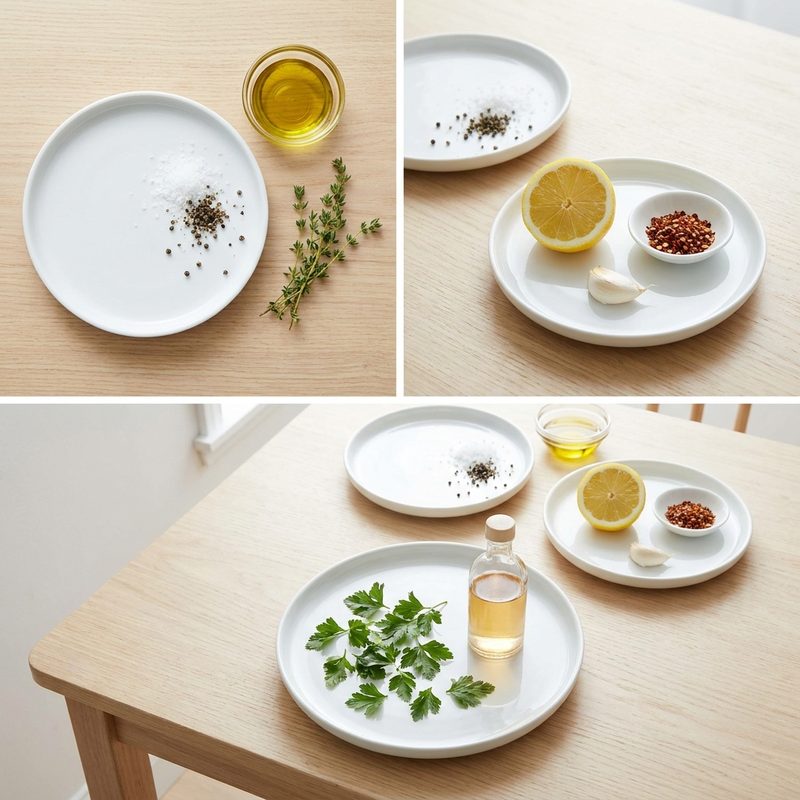
The final layer happens right before serving. This is where you adjust for 'brightness.' Heat often dulls flavors, so a final hit of acid—like a squeeze of lemon juice, a teaspoon of vinegar, or a splash of wine—can wake the whole dish up. Finally, stir in fresh herbs or a finishing oil. These delicate ingredients lose their punch if cooked too long, so adding them at the very end ensures their aroma is at its peak when the plate hits the table.