Guide
How to Thicken Sauce Without Flour: Easy Techniques for the Home Cook
Achieving a rich, velvety sauce doesn't always require a flour-based roux. Whether you are cooking gluten-free or simply ran out of all-purpose flour, these professional techniques will help you reach the perfect consistency using common pantry staples.
1. The Cornstarch Slurry Method
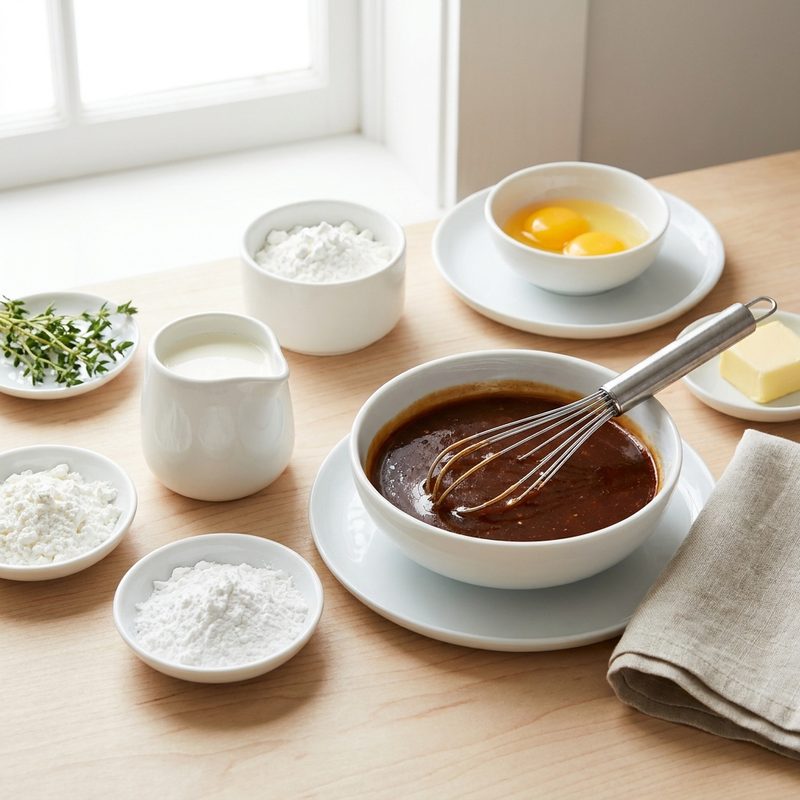
Cornstarch is the most common flour alternative because it has twice the thickening power. To avoid lumps, never add the powder directly to hot liquid. Instead, create a 'slurry' by mixing equal parts cornstarch and cold water (usually 1 tablespoon of each) in a small bowl until smooth. Slowly whisk the slurry into your simmering sauce. You must bring the sauce to a boil for at least one minute to activate the starch and remove any chalky taste.
2. The Reduction Technique
Reduction is the most flavor-intensive way to thicken a sauce. By simmering the liquid uncovered over medium-high heat, the water evaporates, leaving behind concentrated flavors and a thicker consistency. This works best for wine-based pan sauces and stocks. Keep a close eye on the pot, as the volume can drop quickly, and the saltiness will increase as the liquid vanishes.
3. Pureed Vegetables
This is a fantastic way to add body and nutrition without any starches. If you are making a stew or a soup that contains root vegetables like potatoes, carrots, or cauliflower, simply remove a cup of the vegetables and some liquid, blend them until smooth, and stir them back into the main pot. The natural fibers and starches in the vegetables provide an immediate, rustic thickness.
4. Finishing with Cold Butter (Monter au Beurre)
For a glossy, restaurant-quality finish, try the French technique of 'mounting with butter.' Once your sauce is finished, remove it from the heat. Whisk in several pats of very cold butter, one at a time, until they are fully emulsified. This won't make a thin soup into a thick gravy, but it adds enough body and 'mouthfeel' to coat the back of a spoon beautifully.
5. Using Egg Yolks
Egg yolks provide a rich, custard-like thickness perfect for delicate sauces or cream soups. To prevent the eggs from scrambling, you must 'temper' them: whisk two egg yolks in a bowl, then slowly drizzle in a ladle of the hot sauce while whisking constantly. Once the egg mixture is warm, pour it back into the main pot and stir over low heat until thickened. Do not let it boil after adding the eggs.